
Susanna Towers - Constructions of Gender in Late Antique Manich
| Schrijver: | Susanna Towers |
|---|---|
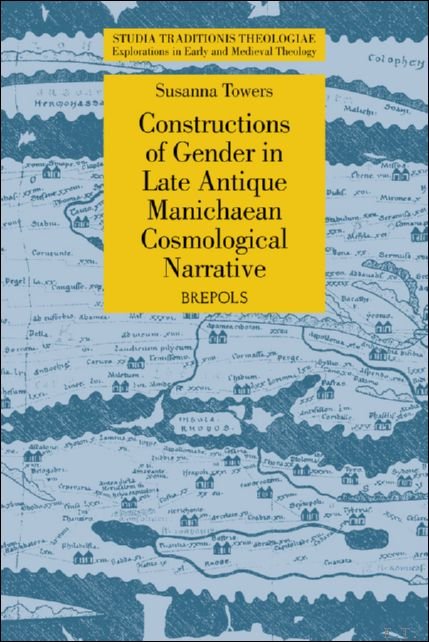
| Titel: | Constructions of Gender in Late Antique Manichaean Cosmological Narrative |
| Uitgever: | , Brepols, 2019 |
| Bijzonderheden: | Paperback, 324 pages, Size:156 x 234 mm, Languages: English, Latin. ISBN 9782503586663. |
| Prijs: | € 75,00 |
| Verzendkosten: | € 6,99 (binnen België) |
| Meer info: |
Summary Manichaeism emerged from Sasanian Persia in the third century CE and flourished in Persia, the Roman Empire, Central Asia and beyond until succumbing to persecution from rival faiths in the eighth to ninth century. Its founder, Mani, claimed to be the final embodiment of a series of prophets sent over time to expound divine wisdom. This monograph explores the constructions of gender embedded in Mani's colourful dualist cosmological narrative, in which a series of gendered divinities are in conflict with the demonic beings of the Kingdom of Darkness. The Jewish and Gnostic roots of Mani's literary constructions of gender are examined in parallel with Sasanian societal expectations. Reconstructions of gender in subsequent Manichaean literature reflect the changing circumstances of the Manichaean community. As the first major study of gender in Manichaean literature, this monograph draws upon established approaches to the study of gender in late antique religious literature, to present a portrait of a historically maligned and persecuted religious community. TABLE OF CONTENTS 1. Introduction: This discusses the history of gender studies and its application to religious studies; a summary of previous literature relating to gender in Manichaeism; a brief life of Mani and its relation to his canon of texts. It outlines the contents of the following chapters. 2. The Manichaean Father: exploration and identification of gendered attributes associated with masculinity with reference to Connell's model of hegemonic masculinity. The Manichaean Father is considered as embodiment of desirable masculine traits and the appropriate exercise of masculine rulership and authority. 3. The Chief Archon: This chapter examines the construction of gender implicit in the characterization of the chief archon. Mani's writings characterize the chief archon in polar opposition to the Manichaean Father as exemplum of masculine rulership which embodies lust for power and territory. Mani characterizes the chief archon as a dangerous outsider who seeks to invade. This is expressed through the trope of the cannibal. The chief archon's acts of cannibalism mark him as alien, uncivilized and savage. Manichaean texts written after Mani's death reflect the persecution of the Manichaean community. The characterization of the chief archon develops to reveal a tyrannous ruler who incites fear and terror in his own subjects. 4. The First Man: This chapter considers the apparent paradox of the two competing constructions of masculinity evident in the characterization of the Manichaean First Man, who plays a central role in Manichaean cosmological drama. His characterization as both valiant warrior and suffering victim in defeat is explored in the context of the changing circumstances of the Manichaean community facing persecution. Parallel models of endurance as a worthy expression of masculinity in Jewish, Judaeo-Christian and early Christian literature are discussed. 5. The Mother of Life: This chapter explores the gendered characterization of the Manichaean Mother of Life in Manichaean literature. As mother of the First Man, the Mother of Life embodies positive motherhood, demonstrating nurturing characteristics. Her role in the mythological drama is considered as an expression of the Jewish/Judaeo-Christian literary Wisdom figure (Sophia, Hokmah). The Mother of Life shares and extends imagery attached to Hokmah to encompass wisdom as a weapon. The Mother of Life is also characterized as a model of feminine imprecation to masculine authority through the valorization of her prayer to the Manichaean Father on behalf of the beleaguered First Man. This is discussed in relation to the veneration of Hannah's prayer (1 Sam.) in rabbinic literature. 6. The Manichaean Demoness Az and the yetzer hara: This chapter explores parallels between the feminine-gendered demon Az and the evolving Jewish concept of the "evil inclination" (the yetzer hara) as expressions of the human propensity to sin. As mother of Adam and Eve and mother of the demons, the maternal style of the demoness Az polarizes the motherhood of the Mother of Life. 7. The Maiden of Light: This chapter explores the characterization of the Maiden of Light and her epithets of purity and wisdom in the context of the seductive display of her image to the archons in Manichaean mythology. This act is considered in the context of the model used by feminist biblical scholars of the male as owner of the gaze and the female as object of male gaze. The chapter argues that the characterization of the Maiden of Light should be considered in relation to the biblical characterizations of Susanna, Judith and Esther. These reveal the female as both victim and manipulator of male gaze. These texts reveal that the seeking of male gaze is extolled in cases of communal threat when authorized by masculine authority. It is argued that the seductive display of the Maiden of Light allows doubt concerning the exploitation of females within the Mnichaean community. 8. Conclusions: The conclusion draws together the research findings of the previous chapters. Polarized positions within and across constructions of gender are considered.
|


De verkoper zal binnen 3 werkdagen contact met u opnemen om de koop verder af te handelen.
Afbeeldingen (Klik om te vergroten)
Het huisnummer is ook opgegeven in het straat veld. Gelieve controleren of de velden straat en huisnummer correct zijn opgegeven.
Straat:
Nummer:
- Alle boeken zijn compleet en verkeren in normale antiquarische staat, tenzij anders beschreven. Kleine onvolkomenheden, zoals een ingeplakte ex-libris of een naam op het schutblad, zijn niet altijd vermeld
- U handelt deze order direct af met Erik Tonen Books
Dit boekwinkeltje is een zakelijke verkoper. Hierdoor heeft u o.a. herroepingsrecht waarmee u het boek binnen 14 dagen na ontvangst retour kunt sturen. Verder lezen. - Na uw bestelling ontvangen u en Erik Tonen Books een bevestiging per e-mail. In de e-mail staan de naam, adres, woonplaats en telefoonnummer van Erik Tonen Books vermeld
- De Koper betaalt de verzendkosten, tenzij anders overeen gekomen
- Erik Tonen Books kan betaling vooraf vragen
- Boekwinkeltjes.nl probeert Kopers en Verkopers tot elkaar te brengen. Boekwinkeltjes.nl is echter nimmer partij bij een overeenkomst die gesloten wordt tussen Koper en Verkoper door gebruikmaking van de site. Als u een geschil hebt met één of meer gebruikers, dient u dit zelf op te lossen. U vrijwaart Boekwinkeltjes.nl van enigerlei vorderingen, aanspraken op schadevergoeding en dergelijke, verband houdende met dergelijke geschillen.
Onthoud mijn gegevens
Registreer u vrijblijvend als koper!
Besteld, hoe nu verder?
De verkoper zal binnen 3 werkdagen contact met u opnemen om de koop verder af te handelen. Afhankelijk van uw locatie heeft u in de meeste gevallen binnen 2 dagen uw bestelling in huis.