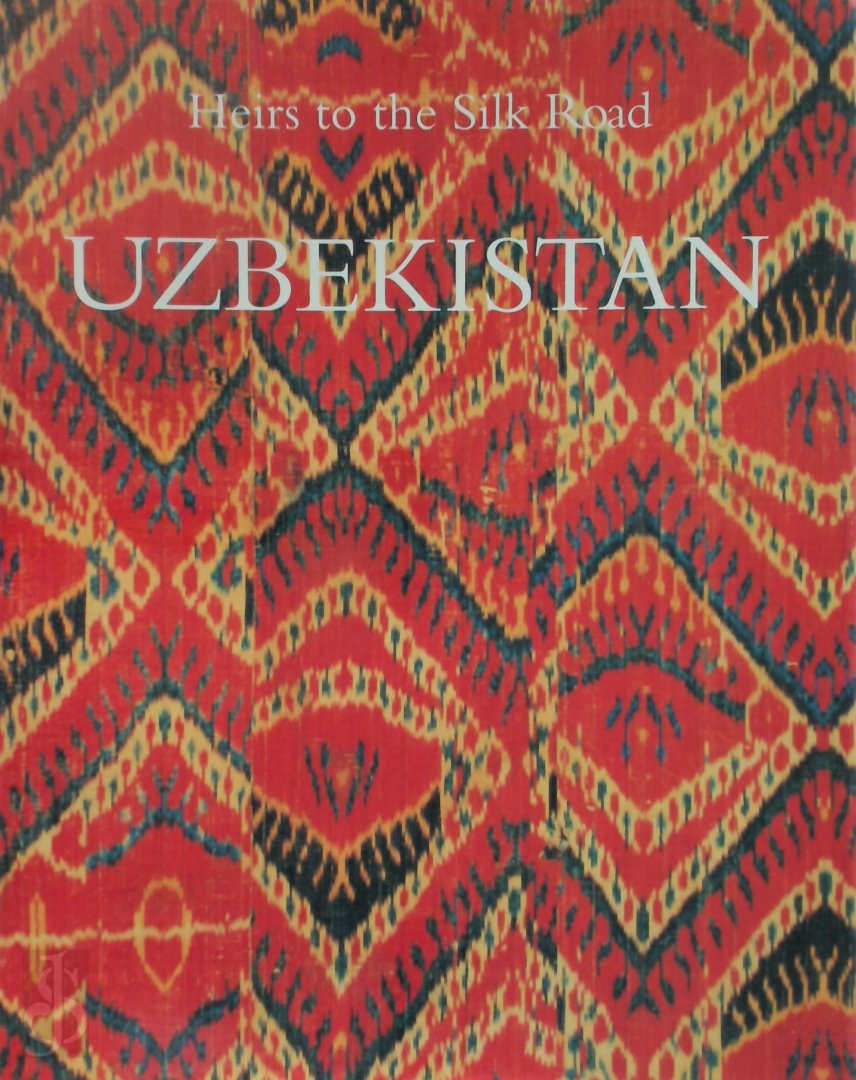
Johannes Kalter, Margareta Pavaloi - Uzbekistan - Heirs to the
| Schrijver: | Johannes Kalter, Margareta Pavaloi |
|---|---|
| Titel: | Uzbekistan - Heirs to the Silk Road |
| ISBN: | 9780500974513 |
| Taal: | Engels |
| Uitgever: | Thames and Hudson |
| Bijzonderheden: | Goed, 1997, Linnen band met stofomslag, 360p |
| Prijs: | € 70,00 |
| Verzendkosten: | € 3,50 (binnen Nederland) |
| Meer info: |
Since its rediscovery by European explorers and travellers in the nineteenth century, the Silk Road has lost nothing of its fascination. It continues to evoke images of heavily laden caravans crossing endless deserts, steppes and mountain ranges to reach the markets of wealthy oasis towns. From the second century BC, this network of merchants' routes, well over 4,000 miles long, linked China and the Roman Empire. It served the trade of luxury goods, notably silk, and stimulated the spread of ideas about religion, culture and art. The young republic of Uzbekistan, with its ancient urban cultural centres of Bukhara, Chiwa and Samarkand, is the heartland of the Silk Road. The artistic and cultural history of the region, through more than two millennia, is represented here in four main sections: Transoxiana from the fourth century BC to the arrival of Islam in the eighth century AD; Central Asia as a cultural and political centre of Islam in the eighth century until the fall of the Timurid empire at the beginning of the sixteenth century; Turkestan at the time of Uzbek-dominated khanates from the sixteenth century up to the Russian conquest and Russian Revolution; and Uzbekistan from Soviet rule until after the establishment of sovereignty. The evolving history of the region is clearly explained in the context of its complex geography, together with analyses of the architecture, the art of the book, Islamic arts and crafts, and the rich variety of textiles of the region. Central Asia's position at the heart of the Eurasian land mass naturally attracted a long succession of conquerors, traders, envoys and missionaries. Alexander the Great, Genghis Khan and Timur all led armies from here whose subjugation of large parts of the East had repercussions on the whole of Europe. But they were also laying the foundations of a great empire in which trade and the arts could flourish. In the cities, people of many different religions, languages and cultures met, and between the nomads of the steppes and the settled population of the cities there was regular exchange of goods and ideas. The synthesis of all these influences has led to a unique and individual culture of great strength and fascination. The cultural history of this region is illustrated with pictures of archaeological finds and ethnographical objects from European and Uzbek museums and private collections, niany published for the first time.
|

De verkoper zal binnen 3 werkdagen contact met u opnemen om de koop verder af te handelen.
Afbeeldingen (Klik om te vergroten)