Mark William Jones - 1923
| Schrijver: | Mark William Jones |
|---|---|
| Titel: | 1923 |
| ISBN: | 9781541600201 |
| Uitgever: | Basic Books |
| Bijzonderheden: | Goed, 2023, Gekartonneerd met stofomslag, 398p |
| Prijs: | € 10,00 |
| Verzendkosten: | € 3,50 (binnen Nederland) |
| Meer info: |
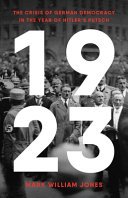
\"In 1923, the far right nearly unraveled the fledgling Weimar Republic. In January of that year, France accused Germany of failing to pay reparations mandated by the Treaty of Versailles, and the French began to occupy the industrial Ruhr district, the heart of the German economy. The German government refused to cooperate with the French occupiers, and the ensuing economic crisis worsened what was already a period of rampant inflation and mass unemployment. The National Socialist party and other right-wing radicals, already fierce opponents of the Weimar Republic, played to mass prejudice as they blamed the national government and Jewish elites for Germany's ills. Amid the chaos, in November Hitler and the Nazis tried and failed to seize power in Munich, the infamous \"beer hall putsch.\" In 1923, historian Mark Jones draws on new research in German, French, English, and American sources to reveal what fueled Hitler's early rise and what crushed it, showing that pragmatism and international cooperation brought Germany back from the brink of destruction. Offering deeply personal stories of civilians' everyday experience of the occupation's profound violence and its economic fallout, as well as high-level analysis of German politics and European geopolitics, Jones traces how Hitler and the Nazis exploited public unrest to attempt to ride to power for the first time. He also shows how Germany stemmed the rise of Nazism after the shock of Hitler's putsch, which collapsed due to disorganization. At the end of 1923 and into 1924, with Hitler imprisoned, the Weimar Republic undertook an unprecedented level of transnational cooperation with the West, resulting in the Dawes Plan, an American-backed international financial 'rescue package' that helped lower reparation costs, stabilize the German economy, and put the Weimar Republic on the road to its best years. 1923, Jones shows, was the first time interwar Western intellectuals and leaders realized that the only pathway out of the hatreds created by aggressive nationalism and chauvinism was close economic co-operation. This is a deeply researched, gripping account of how and why Germans preserved their republic amid a year of onslaught. Although Germany would succumb to tyranny a decade later, the story of the republic's survival in 1923 offers essential lessons to anyone concerned about the future of democracy today\"--
|

De verkoper zal binnen 3 werkdagen contact met u opnemen om de koop verder af te handelen.
Afbeeldingen (Klik om te vergroten)