
Stel een vraag
Met het formulier hier onder kunt u contact op nemen met boekwinkel Boekstra.
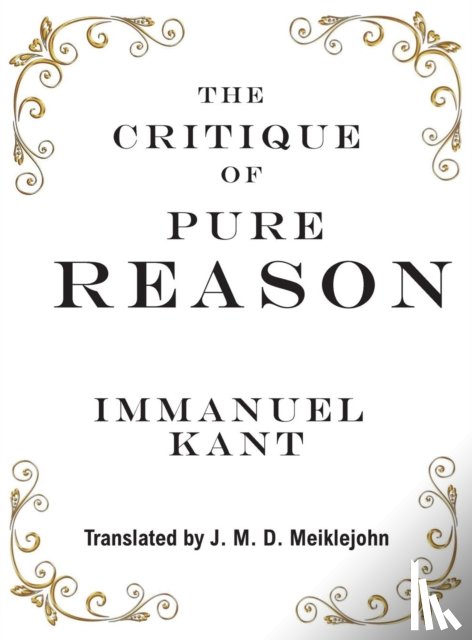
Kant, Immanuel - The Critique of Pure Reason
De vraag gaat over de volgende titel:
| Afbeelding: |
|
|---|---|
| Schrijver: | Kant, Immanuel |
| Titel: | The Critique of Pure Reason |
| ISBN: | 9781950330188 |
| Uitgever: | Classic Wisdom Reprint |
| Bijzonderheid: | 2019 274pp Gebonden |
| Prijs: |
€ 37,00
Gratis
|
| Meer info | Flaptekst Kant builds on the work of empiricist philosophers such as John Locke and David Hume, as well as rationalists such as Gottfried Wilhelm Leibniz and Christian Wolff. He expounds new ideas on the nature of space and time, and tries to provide solutions to Hume's scepticism regarding human knowledge of the relation of cause and effect, and René Descartes' scepticism regarding knowledge of the external world. This is argued through the transcendental idealism of objects (as appearance) and their form of appearance. Kant regards the former as mere representations and not as things in themselves, and the latter as only sensible forms of our intuition, but not determinations given for themselves or conditions of objects as things in themselves. This grants the possibility of a priori knowledge, since objects as appearance must conform to our cognition . . . which is to establish something about objects before they are given to us. Knowledge independent of experience Kant calls a priori knowledge, while knowledge obtained through experience is termed a posteriori. |
| Boek bekijken | |

Verzendkosten 1,75 euro per zending binnen Nederland, vanaf 19,90 euro GEEN verzendkosten binnen Nederland.
Verzendkosten België 3,95 euro per zending.
Bij bestellingen van 10 euro of minder zijn de verzendkosten hoger; zie vermelding bij het boek.
Speciale verzoeken? Meestal geen punt, vermeld ze in het veld opmerking.
De actuele levertijd kunt u vinden op onze website.
De verkoper zal binnen 1 werkdag contact met u opnemen om de koop verder af te handelen.