
Stel een vraag
Met het formulier hier onder kunt u contact op nemen met boekwinkel De Slegte.
Claire Weeda - Ethnicity in Medieval Europe, 950-1250 Medicine, Power and Religion
De vraag gaat over de volgende titel:
| Afbeelding: |
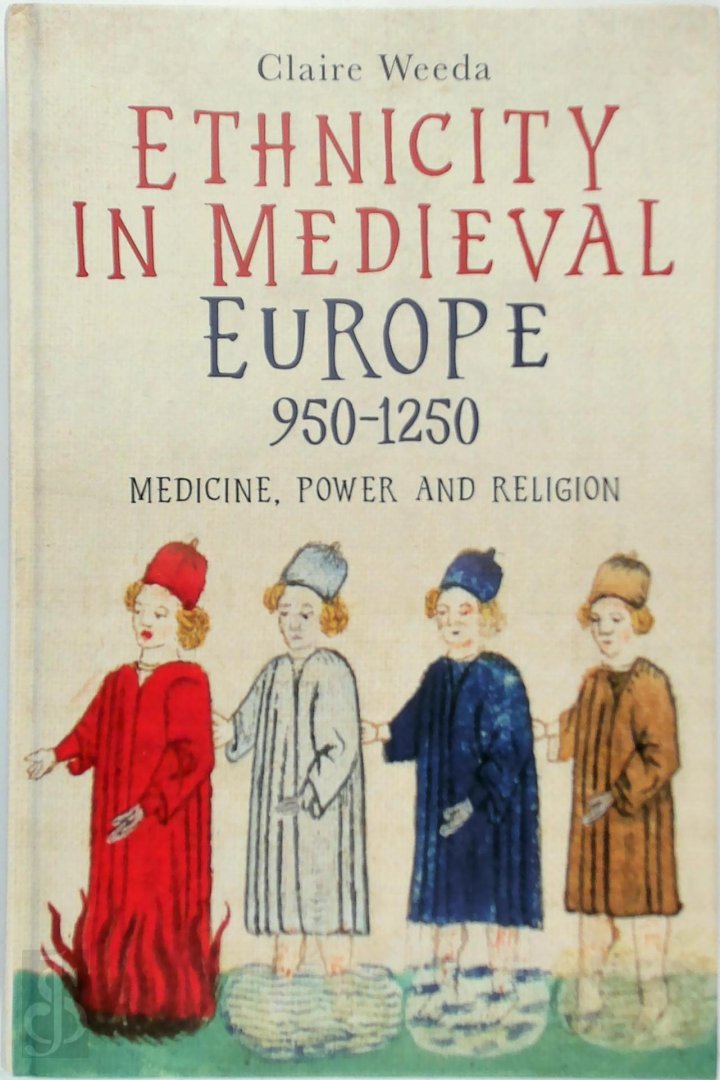
|
|---|---|
| Schrijver: | Claire Weeda |
| Titel: | Ethnicity in Medieval Europe, 950-1250 Medicine, Power and Religion |
| ISBN: | 9781914049019 |
| Uitgever: | Boydell & Brewer |
| Bijzonderheid: | Goed, 2021, Hardcover, 356p |
| Prijs: |
€ 65,00
€ 3,50
|
| Meer info | An investigation into how racial stereotypes were created and used in the European Middle Ages.Students in twelfth-century Paris held slanging matches, branding the English drunkards, the Germans madmen and the French as arrogant. On crusade, army recruits from different ethnic backgrounds taunted each other's military skills. Men producing ethnography in monasteries and at court drafted derogatory descriptions of peoples dwelling in territories under colonisation, questioning their work ethic, social organisation, religious devotion and humanness. Monks listed and ruminated on the alleged traits of Jews, Saracens, Greeks, Saxons and Britons and their acceptance or rejection of Christianity.In this radical new approach to representations of nationhood in medieval western Europe, the author argues that ethnic stereotypes were constructed and wielded rhetorically to justify property claims, flaunt military strength and assert moral and cultural ascendance over others. The gendered images of ethnicity in circulation reflect a negotiation over self-representations of discipline, rationality and strength, juxtaposed with the alleged chaos and weakness of racialised others. Interpreting nationhood through a religious lens, monks and schoolmen explained it as scientifically informed by environmental medicine, an ancient theory that held that location and climate influenced the physical and mental traits of peoples. Drawing on lists of ethnic character traits, school textbooks, medical treatises, proverbs, poetry and chronicles, this book shows that ethnic stereotypes served as rhetorical tools of power, crafting relationships within communities and towards others.tion reflect a negotiation over self-representations of discipline, rationality and strength, juxtaposed with the alleged chaos and weakness of racialised others. Interpreting nationhood through a religious lens, monks and schoolmen explained it as scientifically informed by environmental medicine, an ancient theory that held that location and climate influenced the physical and mental traits of peoples. Drawing on lists of ethnic character traits, school textbooks, medical treatises, proverbs, poetry and chronicles, this book shows that ethnic stereotypes served as rhetorical tools of power, crafting relationships within communities and towards others.tion reflect a negotiation over self-representations of discipline, rationality and strength, juxtaposed with the alleged chaos and weakness of racialised others. Interpreting nationhood through a religious lens, monks and schoolmen explained it as scientifically informed by environmental medicine, an ancient theory that held that location and climate influenced the physical and mental traits of peoples. Drawing on lists of ethnic character traits, school textbooks, medical treatises, proverbs, poetry and chronicles, this book shows that ethnic stereotypes served as rhetorical tools of power, crafting relationships within communities and towards others.tion reflect a negotiation over self-representations of discipline, rationality and strength, juxtaposed with the alleged chaos and weakness of racialised others. Interpreting nationhood through a religious lens, monks and schoolmen explained it as scientifically informed by environmental medicine, an ancient theory that held that location and climate influenced the physical and mental traits of peoples. Drawing on lists of ethnic character traits, school textbooks, medical treatises, proverbs, poetry and chronicles, this book shows that ethnic stereotypes served as rhetorical tools of power, crafting relationships within communities and towards others.d the physical and mental traits of peoples. Drawing on lists of ethnic character traits, school textbooks, medical treatises, proverbs, poetry and chronicles, this book shows that ethnic stereotypes served as rhetorical tools of power, crafting relationships within communities and towards others. |
| Boek bekijken | |

De verkoper zal binnen 3 werkdagen contact met u opnemen om de koop verder af te handelen.