
Stel een vraag
Met het formulier hier onder kunt u contact op nemen met boekwinkel Erik Tonen Books.
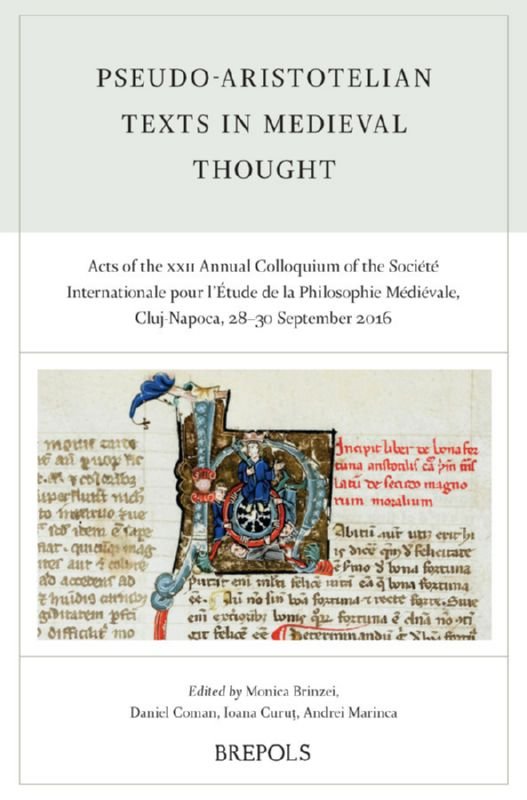
Monica Brinzei, Daniel Coman, Ioana Curut, Andrei Marinca (eds) - Pseudo-Aristotelian Texts in Medieval Thought. Acts of the XXII Annual Colloquium of the Société Internationale pour l?Étude de la Philosophie Médiévale, Cluj-Napoca, 28?30 September 2016
De vraag gaat over de volgende titel:
| Afbeelding: |
|
|---|---|
| Schrijver: | Monica Brinzei, Daniel Coman, Ioana Curut, Andrei Marinca (eds) |
| Titel: | Pseudo-Aristotelian Texts in Medieval Thought. Acts of the XXII Annual Colloquium of the Société Internationale pour l?Étude de la Philosophie Médiévale, Cluj-Napoca, 28?30 September 2016 |
| ISBN: | |
| Uitgever: | , Brepols, 2023 |
| Bijzonderheid: | Hardback, xxii + 360 pages, Size:156 x 234 mm, Illustrations:3 tables b/w., Language(s):English, German. ISBN 9782503606064. |
| Prijs: |
€ 70,00
€ 6,99
|
| Meer info | Summary The Philosopher, the Master of Those Who Know, was the dominant pagan authority in all four of the main traditions of medieval philosophy: Arabic, Greek, Hebrew, and Latin. Yet we now know that a number of works attributed to Aristotle were in fact spurious, authored by others who claimed to be, or whom others claimed to be, the Stagirite, for example, the Secretum secretorum, the Liber de causis, De mundo, De proprietatibus elementorum, De pomo, and De plantis. These writings strongly impacted medieval thought in various and fascinating ways, both in the original language, be it Arabic, Greek, Hebrew or Latin, and in translation. The mechanisms of their production, dissemination, and translation are themselves worthy of attention. Many of these works spawned commentary traditions of their own, parallel to those involving the classic texts of Peripatetic philosophy. Apparent contradictions between ideas expressed in these treatises and those found in what we consider to be authentic works, for instance ideas that appeared to derive more from the Academy than from the Lyceum, provoked questions about authenticity and about the possible evolution of Aristotle's thought. Finally, these texts were employed in one way or another in many genres of philosophical literature in the Middle Ages, including metaphysics, natural and moral philosophy, theology, and even more exotic disciplines like chiromancy and alchemy. This volume aims to shed new light on various aspects of the history of Pseudo-Aristotelian texts in the Middle Ages. TABLE OF CONTENTS Introduction Pieter De Leemans (?) and Lisa Devriese, Translating and Reading Pseudo-Aristotle in the Latin West William Duba, Balancing Authority on a Column of Fire: The Secret of Secrets and the Salvation of Aristotle António Rocha Martins, The Secretum secretorum and the Idea of Political Happiness in the Latin Middle Ages Pavlína Cermanová, Greek and Arabic Inspirations for Organizing Medieval Banquets: The Pseudo-Aristotelian Secretum secretorum as a Source and a Model for Medieval Advice Literature Julie Loveland Swanstrom, Secondary Causes in the Liber de Causis and the Work of Thomas Aquinas Henryk Anzulewicz, Der Liber de causis als Quelle der Intellektlehre des Albertus Magnus Beate Ulrike La Sala, The Arabic Islamic Reception of the Arabic Plotinus and Maimonides' Theory of Emanation Marilena Panarelli, Spiritus and Plant Formation: Albert the Great's Rrestatement of the Pseudo-Aristotelian De plantis Evelina Miteva, From Pseudo-Aristotle to Pseudo-Albert: The Emancipation of Natural Philosophy Pavel Brazek, Iste liber videtur esse factus ab Aristotile: Bartholomew of Bruges and the Medieval Reception of the De Inundatione Nili Abraham Melamed, The Medieval Hebrew De pomo and the Myth of the Jewish Aristotle Ioana Curu?, The Medieval Latin Reception of Liber de Pomo in Questions De intentione Aristotelis on the Eternity of the World (Available in Open Access) Andrei Marinca, The Pseudo-Aristotelian De mundo and Fourteenth-Century Theologians (Available in Open Access) Index of Manuscripts Index of Names |
| Boek bekijken | |


De verkoper zal binnen 3 werkdagen contact met u opnemen om de koop verder af te handelen.