
Stel een vraag
Met het formulier hier onder kunt u contact op nemen met boekwinkel Olive books.
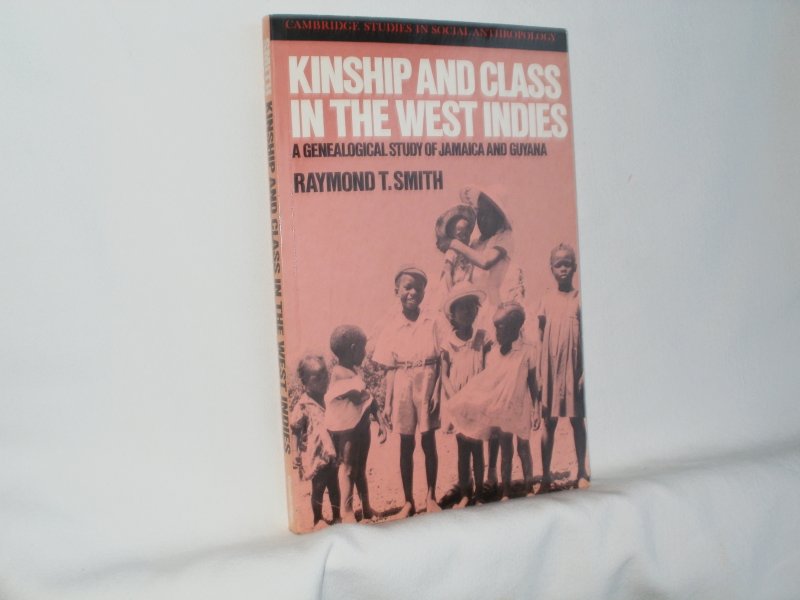
Smith, Raymond T. - Kinship and Class in the West Indies: A Genealogical Study of Jamaica and Guyana
De vraag gaat over de volgende titel:
| Afbeelding: |
|
|---|---|
| Schrijver: | Smith, Raymond T. |
| Titel: | Kinship and Class in the West Indies: A Genealogical Study of Jamaica and Guyana |
| ISBN: | 0521396492 |
| Uitgever: | Cambridge University Press, England, Cambridge Studies in Social Anthropology. |
| Bijzonderheid: | 1990, first paperback edition, 202 pp., paperback, incl. index, tables and maps, very good condition. |
| Prijs: | € 35,00 |
| Meer info | Is a family system that permits freedom to enter, dissolve, and re-enter sexual unions, that tolerates high illegitimacy rates, and allows a large proportion of households to be headed by women, viable, natural and healthy? This is an appropriate question to ask of many modern industrial societies in the 1980s. Yet a system with just those factors has been in place in the West Indies for 150 years. In this book, Raymond T. Smith explores the extensive family and kinship ties of West Indians in Jamaica and Guyana, and in so doing dispels many of the myths that exist about West Indian family life. Smith defines three types of family structure in the West Indies (adapted from Elizabeth Bott, *Family and Social Network*): 1) joint conjugal role pattern, 2) segregated conjugal role pattern, and 3) disassociated conjugal role pattern (pgs. 141-148). The meaning of these terms is not immediately discernable, so I will explain them a little. The first one, "joint conjugal role pattern" is basically the "nuclear family": husband, wife and child(ren). The "joint" part of the term denotes that the duties of both husband and wife (child rearing, cooking, cleaning) are shared. This family structure is most common in the modern world, especially in the United States. Simple enough. The second type of family form, "segregated conjugal role pattern", is what many would consider the traditional roles of husband and wife, where "men should provide support and general protection while women engage in child rearing and domestic work" (146). That is also simple enough. The third pattern, "disassociated conjugal role pattern", is the key to understanding West Indian family structure, according to Smith. This type of family is most fully embodied in what is frequently called a "visiting union" - where the father lives in a different household than his children and their mother. He provides financial support to them and visits every once in a while. In American culture, such a father might be thought of as "not there", i.e. not providing for the emotional, moral and spiritual guidance of his children, even if he does provide for them financially. But to apply this set of standards to the West Indian situation, per Smith, is essentially ethnocentric. |
| Boek bekijken | |
De verkoper zal binnen 3 werkdagen contact met u opnemen om de koop verder af te handelen.